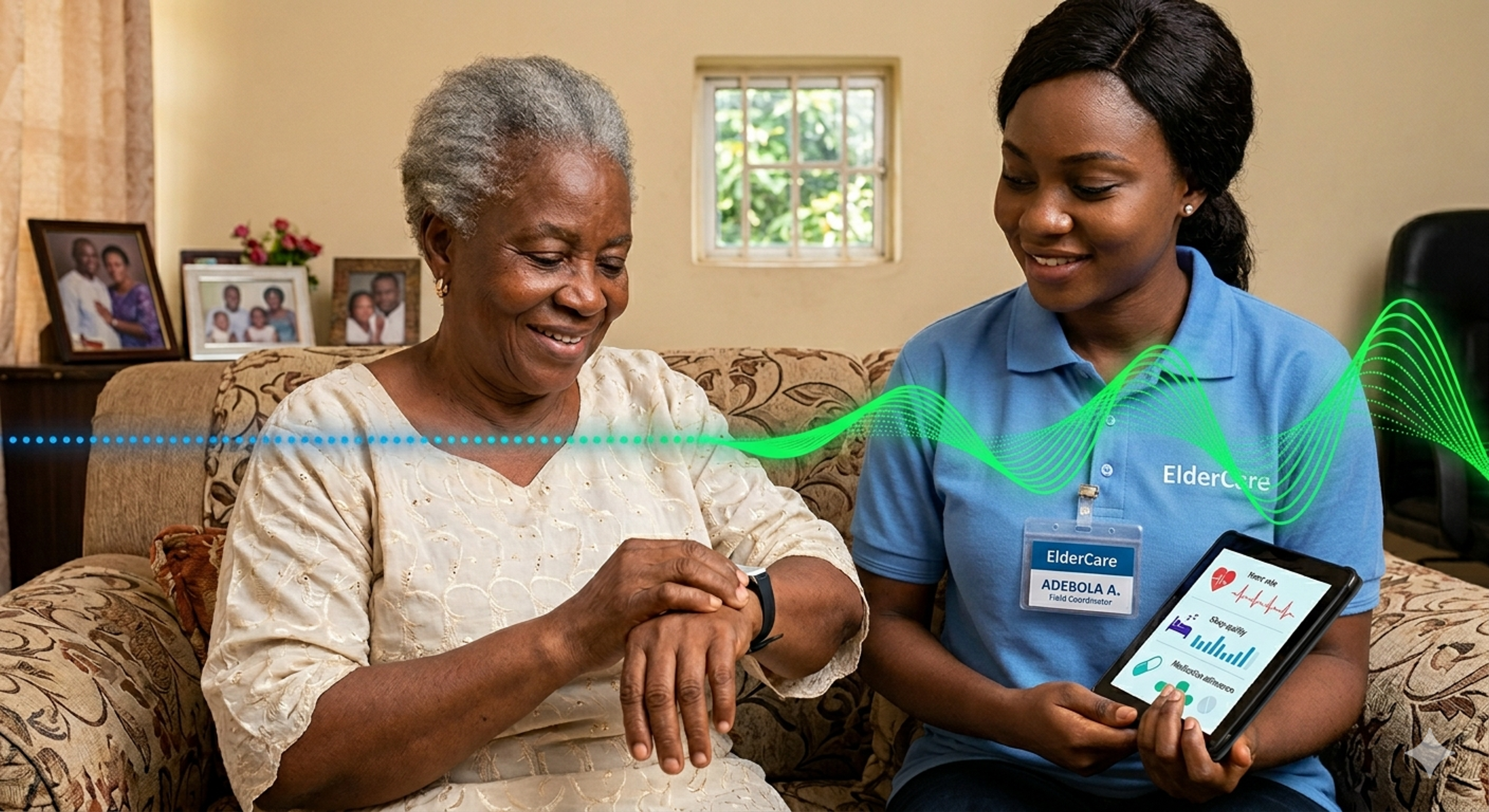

Elderly populations generate critical health signals daily — missed medications, skipped meals, unusual symptoms, emotional withdrawal — yet most of this information is lost in informal channels like phone calls to relatives, WhatsApp messages to neighbours, or unrecorded conversations with household help. When wellness is unstructured, families and clinicians see isolated incidents instead of recurring patterns. The result is reactive caregiving: late-stage hospital admissions, avoidable emergencies, prescription cycles without adherence data, and no measurable view of how an older adult is actually doing between clinic appointments.
Without categorized, trackable wellness reporting, accountability in eldercare remains emotional rather than operational. Families cannot reliably measure medication adherence, detect gradual decline, or flag recurring symptoms early. Clinicians discharge patients without continuous feedback loops, operating blind between visits. Hospital administrators and public health planners work without real-time patient-generated intelligence, creating a disconnect between clinical recommendations and daily reality. Over time, this weakens care quality, strains emergency services, and limits the system's ability to intervene before conditions escalate.
The cost of ignoring daily eldercare data is not just missed pills — it is preventable hospitalisations, avoidable deaths, and the quiet erosion of dignity that comes when older adults feel forgotten between appointments. Structured eldercare monitoring transforms daily check-ins into measurable health intelligence, enabling earlier interventions, transparent care coordination, and data-informed clinical decisions. Societies that treat eldercare reporting as infrastructure, rather than sentiment, position themselves to protect their ageing populations with the same rigour they bring to any other system worth preserving.