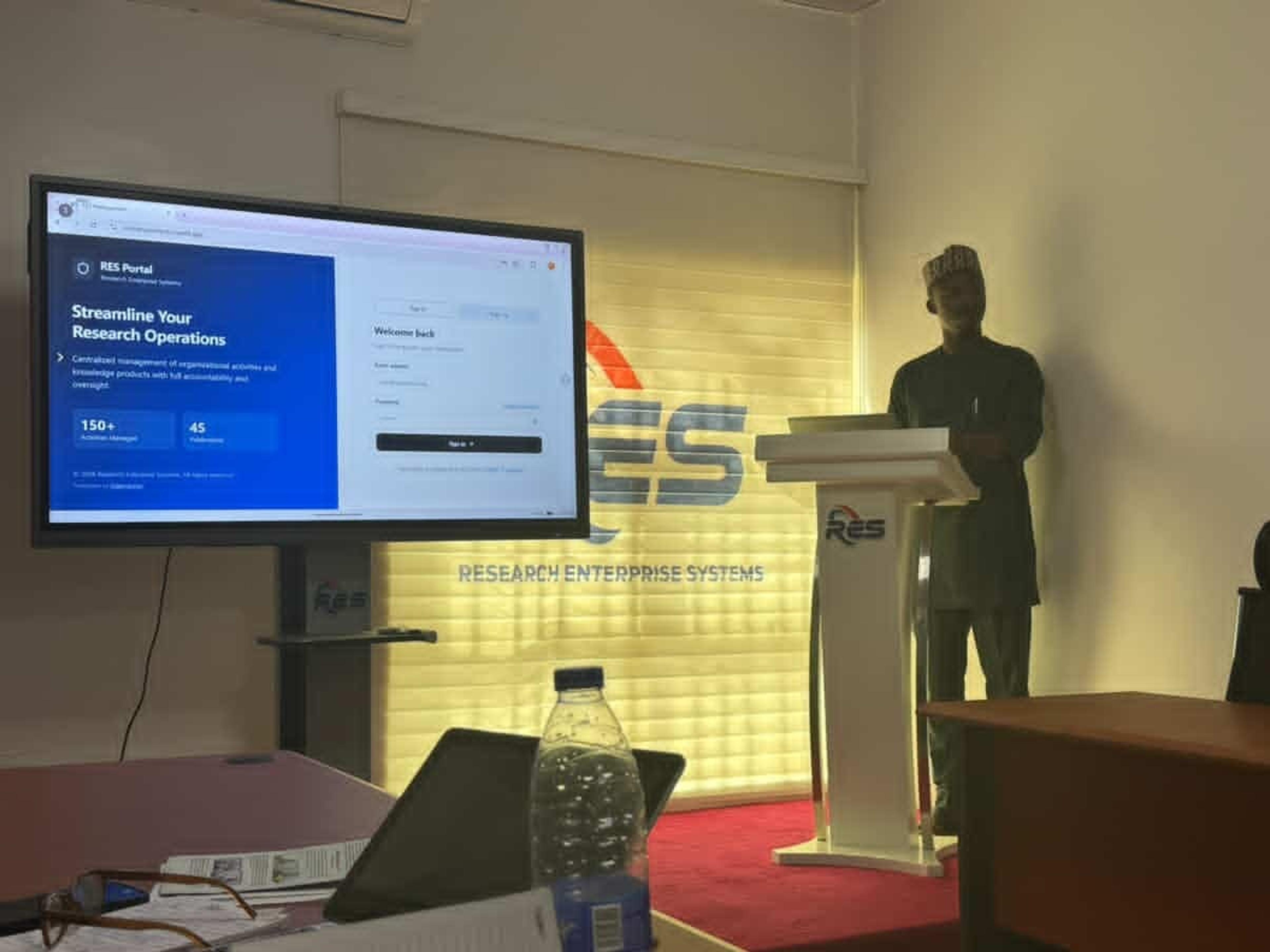

The onboarding of the digital platform developed for Research Enterprise Systems (RES) marked more than the launch of a new tool, it created space to reflect on how organizations use technology to support their mission and daily work. Many institutions rely on off-the-shelf platforms that promise efficiency but rarely align with how teams actually operate. This disconnect often leads to fragmented workflows, duplicated effort, and systems that feel imposed rather than supportive. Over time, technology meant to enable work becomes a source of friction.
For a research-focused organization like RES, these challenges are especially critical. Their work depends on clarity, structure, accountability, and smooth coordination across knowledge production and communication. Generic platforms often fail to reflect how research outputs are generated, reviewed, and shared, creating gaps between process and practice. Recognizing this, the development approach shifted away from templates and features toward understanding RES as an institution, its mandate, internal workflow, team dynamics, and long-term direction. This insight shaped every design decision from the ground up.
The result was a customized management system built around how RES actually works, not how a generic platform assumes organizations should function. The onboarding process emphasized purpose as much as functionality, helping users see how the system supports their responsibilities rather than replaces them. For SulaimanDev, the project reinforced a core principle: meaningful digital solutions come from studying institutions deeply and designing systems that align with both workflow and identity. When technology fits the organization, it becomes a strategic asset.